Posts

The benefits of being a ๐Ÿ”น๐Ÿ”น๐Ÿ”นer (based on personal experience)

Image
The benefits of participating in ๐Ÿ”น๐Ÿ”น๐Ÿ”น program are numerous and I am only giving a small portion here. Here goes: - You meet lots of great people. Before you even leave for the USA, you meet your fellow ๐Ÿ”น๐Ÿ”น๐Ÿ”นs from your own country. Applicants go through a rigorous selection process, so the ones that do get selected are intelligent, creative, enthusiastic, and a lot of fun. Then you meet your fellow ๐Ÿ”น๐Ÿ”น๐Ÿ”นs from all over the world. Again, you meet intelligent, creative, enthusiastic, and fun people, but this time there is an added benefit of meeting people from other cultures (around 50 countries all told). You get a chance to see these people dance national dances, wear national clothes, and try authentic home-cooked national foods. The experience just opens your eyes to how fascinating and diverse the world is. - You get first-hand experience of American education from two perspectives: as a teacher and as a student. I did all the mundane things students do – I took...

My ๐Ÿ”น๐Ÿ”น๐Ÿ”น year: what, where, when

Image
And now I’m back, with a backpack of new experiences, inspiration, knowledge, and ready to write, write, write! I went to the USA for my ๐Ÿ”น๐Ÿ”น๐Ÿ”น experience on 8 August 2015 and returned on 4 June 2016. The experience was great, fantastic, eye-opening, mind-blowing, developmental and many other positive adjectives. But first, some facts: where exactly did I go and what exactly did I do? Good news: On 30 April 2015, I got an email, which made me jump and yell triumphantly. It started,“Congratulations! You have been selected for the ๐Ÿ”น๐Ÿ”น๐Ÿ”น Program.” In August, I went to teach Russian and study at University of New Haven (West haven, Connecticut, USA). University: University of New Haven  (UNH for short) has a student body of 5,000-10,000 students. Most of the people taking Russian at UNH have one of (or both of) these two majors: criminal justice and national security. Location: UNH is located in a small town of West Haven, which is very conveniently l...

My ๐Ÿ”น๐Ÿ”น๐Ÿ”น application or a teachable moment on essay writing

Image
I did it one day before the deadline. I submitted my ๐Ÿ”น๐Ÿ”น๐Ÿ”นapplication on 30 May 2014. Now, 14 months later, I am going to the USA as a proud ๐Ÿ”น๐Ÿ”น๐Ÿ”นer! The program I am participating in is called ๐Ÿ”น๐Ÿ”น๐Ÿ”น. As a participant of this program I will be teaching Russian and studying at an American university for an academic year. When my students heard the news, they asked, “What did it take to get this grant?” I replied, “Well, there were several stages. First, I had to write a lot of text. Then, I … .” And one student said, “I am curious to read what you wrote.” I suppose many are, so I am going to let you in on one of my application essays. One of the essays I wrote is called “Objectives and motivations.” What I wrote is too long to upload here (1274 words, no less!), so I am only going to share my introduction and conclusion . Oh, and I see a teachable moment here, which I just can’t help using. Introduction "Albert Einstein said, “Life is like riding a bicycle. To ke...

Paraphrasing made easy!

Image
With English being the language of international communication, there are plenty of tests of English for non-native speakers  – IELTS, TOEFL, KET-CPE, to name but a few. Seemingly different, these tests often assess the same skills and abilities. The ability to paraphrase is vital in speaking and writing parts of any test. Why? Because it shows that you actually understand the information you are given and, more importantly, it allows you to demonstrate your knowledge of English. Many people struggle with paraphrasing, but it’s not rocket science. In this post, I want to provide very simple paraphrasing techniques.  Before I do, two words of warning:  1) Don’t get too obsessed. There are words you don’t have to and even shouldn’t paraphrase, for example, conventional words like  chair  or  passport and specialized vocabulary like genetically-modified food  or greenhouse gases . 2) Don’t get too carried away. Don’t forget that your se...

10,000 hours of English

Image
Being a teacher of English , I deal with tons of course books on a daily basis. The authors are doing an incredible job at making the course books engaging, so I inevitably draw a lot of inspiration from the materials. Sometimes a single sentence in the book can start a long train of thought. In this post, I want to give you an example of one such train. Lesson 9A in English File Intermediate (Third Edition)  centers around the topic of luck. In this lesson, the students read a text called "A question of luck?" which explains why certain people become extraordinarily successful and what factors contribute to their success. Have a look at the final paragraph of the text: I don’t know about the specific number – 10,000 hours – but the theory makes a lot of sense for language learning. When deciding to embark on a wonderful journey of learning English, many students pin their hopes on the teacher (after all, he or she is a qualified professional) and the course b...

The Beast or How to Write Essays

Image
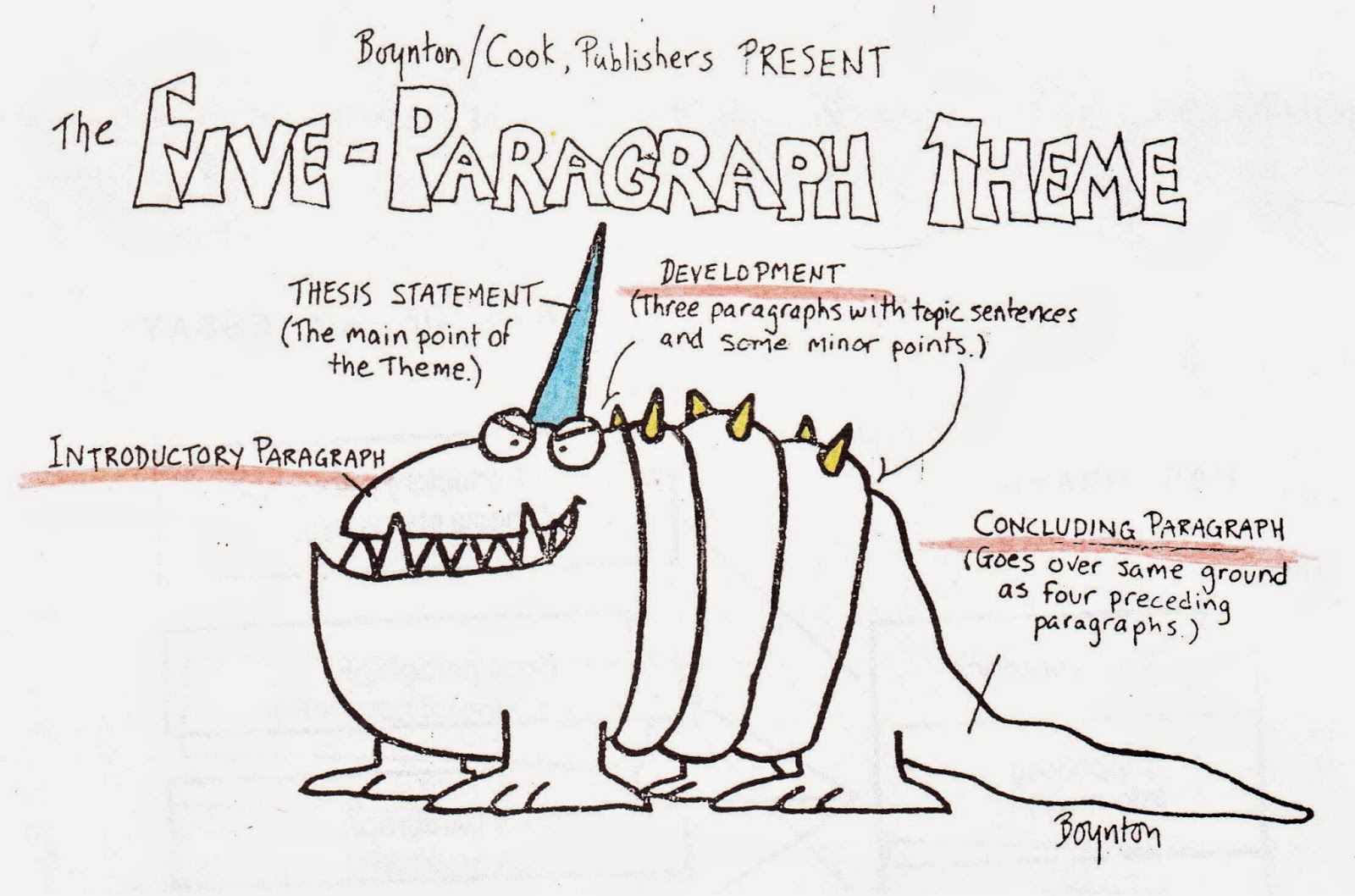
When I was on holiday this summer, I went to my hometown to visit my parents. They asked me to sort out my old papers and books and get rid of the ones that I didn’t use any more. As I was doing that, I found one great picture illustrating the core of essay writing. It’s from a writing workshop I took part in about 10 years ago when I was working at school.  Here it is: This picture called “ The Beast ” shows the structure and the essential parts of an essay in a very simple way. Now, this cute beast has 3 parts – the head, the body, and the tail. Similarly, any essay has 3 parts – the introduction , the main body and the conclusion .  The  introduction leads the reader into the topic and has a clear thesis statement . A thesis is the main idea or opinion that the writer is going to argue. Just like this cute beast has a very visible blue horn, your introduction must have a very clear and direct statement of what you are going to talk about in your essa...

TOEFL and the real life or a verbal feast

Have you ever wondered why international exams in English are the way they are? Well, the answer is simple - they imitate the real-life situations, conditions, tasks, and material you will encounter if you go to study, live, or work abroad. Each assessment criterion and task requirement is based on real life. Some students have their doubts about it, but it’s complete and utter truth.  I mostly teach IELTS (Academic) and TOEFL. They have become such an intrinsic part of my life that whatever I watch or read in English I mentally   match it to this or that exam task or requirement. In this post I’m going to talk about citing in integrated tasks in TOEFL. In these tasks you have to report other people’s ideas, and therefore cite information, or indicate who the ideas belong to or where the information comes from.   Naturally, verbs of reporting are vital for such tasks. Students are perfectly happy with “ say ”. However, I’m not. I usually have to fight to get stu...